
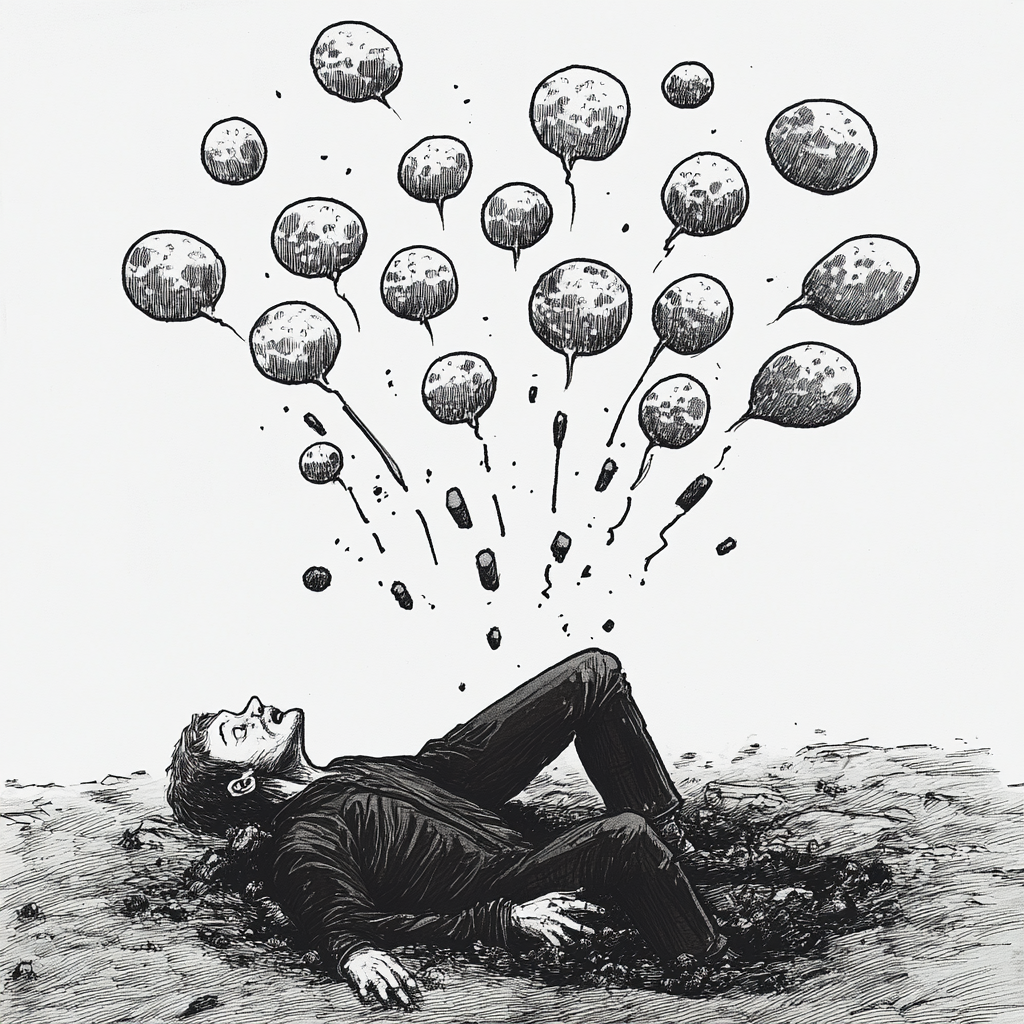
Picture yourself walking down a long, winding path. You are carrying a backpack. At the start of your journey, it is light, filled only with the essentials, lessons you’ve learned, moments of love, and the skills you need to survive. But as you keep walking, you start picking up rocks. A rock for every mistake. A rock for every heartbreak. A rock for every moment of shame you can’t quite shake.
Eventually, the walk becomes a trudge. The weight becomes unbearable .
We often treat memory as a sacred archivist, a faithful librarian keeping the records of our lives intact. But what if I told you that this librarian is unreliable? What if the key to a lighter, freer life isn’t remembering more, but mastering the art of forgetting?
The Biology of the Burden
Why do we hold onto the painful stuff? Why can you remember a breakup from ten years ago in high-definition, but you can’t remember what you had for lunch last Tuesday?
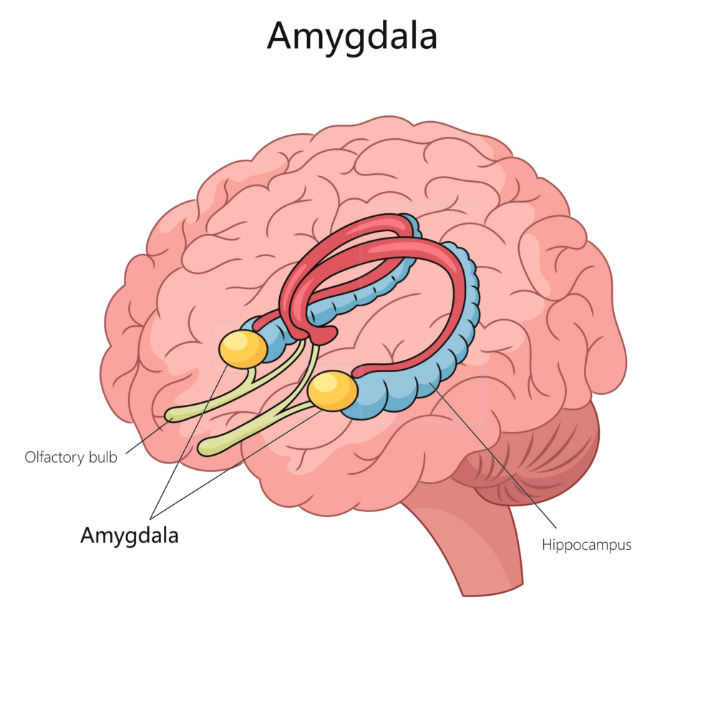
The amygdala is a pair of small almond-shaped structures within the temporal lobe of the brain. It plays a critical role in processing emotions, particularly fear and aggression, and forming emotional memories. The amygdala is a key component of the limbic system, which is involved in motivation, emotion, learning, and memory.
This is called the negativity bias. Evolutionarily, it kept your ancestors from being eaten by predators. Today, it just keeps you up at night replaying an awkward conversation from 2018. The brain thinks it is protecting you, but in reality, it is trapping you in a past that no longer exists .
The Telephone Game: Why Your Memory Is a Liar
Here is the uncomfortable truth: your memories are not video recordings. They are reconstruction projects.
Think of the childhood game “Telephone,” where a message gets whispered from person to person until the final version bears no resemblance to the original. Your brain does the same thing. Every time you pull a memory off the shelf, you are not just viewing it; you are rewriting it. This process is called reconsolidation.
Your current mood, the person you are talking to, and even social pressure can distort the memory. If memories are this malleable, altered, distorted, and sometimes fabricated, why do we let them define our entire identity? If the story isn’t entirely true, maybe you don’t have to be the “victim” or the “failure” that the story says you are.
The Identity Paradox: Who Are You Without the Pain?
This brings us to the most terrifying part of letting go. We cling to our rocks because, after carrying them for so long, we don’t know who we would be without the weight.
This is the Identity Paradox. We crave the freedom of the future, but we are addicted to the familiarity of the past. It is like a caterpillar entering a chrysalis. To become a butterfly, the caterpillar must completely disintegrate. It must stop being what it was to become what it will be .
Letting go of a painful memory often feels like losing a piece of yourself. But you are not the sum of your memories. You are the product of your choices in the present.
The Solution: Pruning and Painting
So, how do we put the rocks down? We can’t just press “delete,” but we can engage in active forgetting.
Think of your mind as a garden. If you don’t tend to it, weeds (painful memories) will choke out the flowers. You have to actively prune the connections you no longer need. This means stopping the cycle of rumination, the repetitive replaying of old tapes, which only strengthens those neural pathways.
Instead, we must use the brain’s neuroplasticity, its ability to rewire itself. Imagine your future as a blank canvas. Every time you seek out a new experience, joy, novelty, a new skill, you are painting over the old, dark colors with bright, new ones .
The brain operates on a “use it or lose it” principle. If you build new roads (new experiences), the old roads (old traumas) eventually become overgrown and fade from lack of use .
The past is a tool, not a prison. You can use the hammer of your experience to build a better house, or you can use it to beat yourself up. The choice is yours.